
Most Shopify sales start with a discount, a banner, and an email. That can work. But the strongest brands plan the sale as one coordinated customer experience.
Use a simple example. A brand offers 25% off selected products from Friday at 9:00 until Sunday at midnight. When Friday arrives, the homepage should announce the sale. Collections should identify the included products. Product pages should explain the saving. The cart should confirm the result. Checkout should show the correct final price.
Support should know the rules. The warehouse should know what demand to expect. When Sunday ends, the offer should disappear everywhere. That is one sale, not a collection of unrelated updates.
Before the sale: make the offer clear and build demand
Write the offer in one sentence
Before designing anything, write one sentence that a customer and every internal team can understand:
Get 25% off selected shoes from Friday at 9:00 until Sunday at midnight. The discount is automatic. Gift cards and products already on sale are excluded.
That sentence defines the saving, the included products, the schedule, the discount method, and the exclusions. If the offer needs several paragraphs before it makes sense, it will be difficult to explain consistently across the store.
Give shoppers a reason to prepare
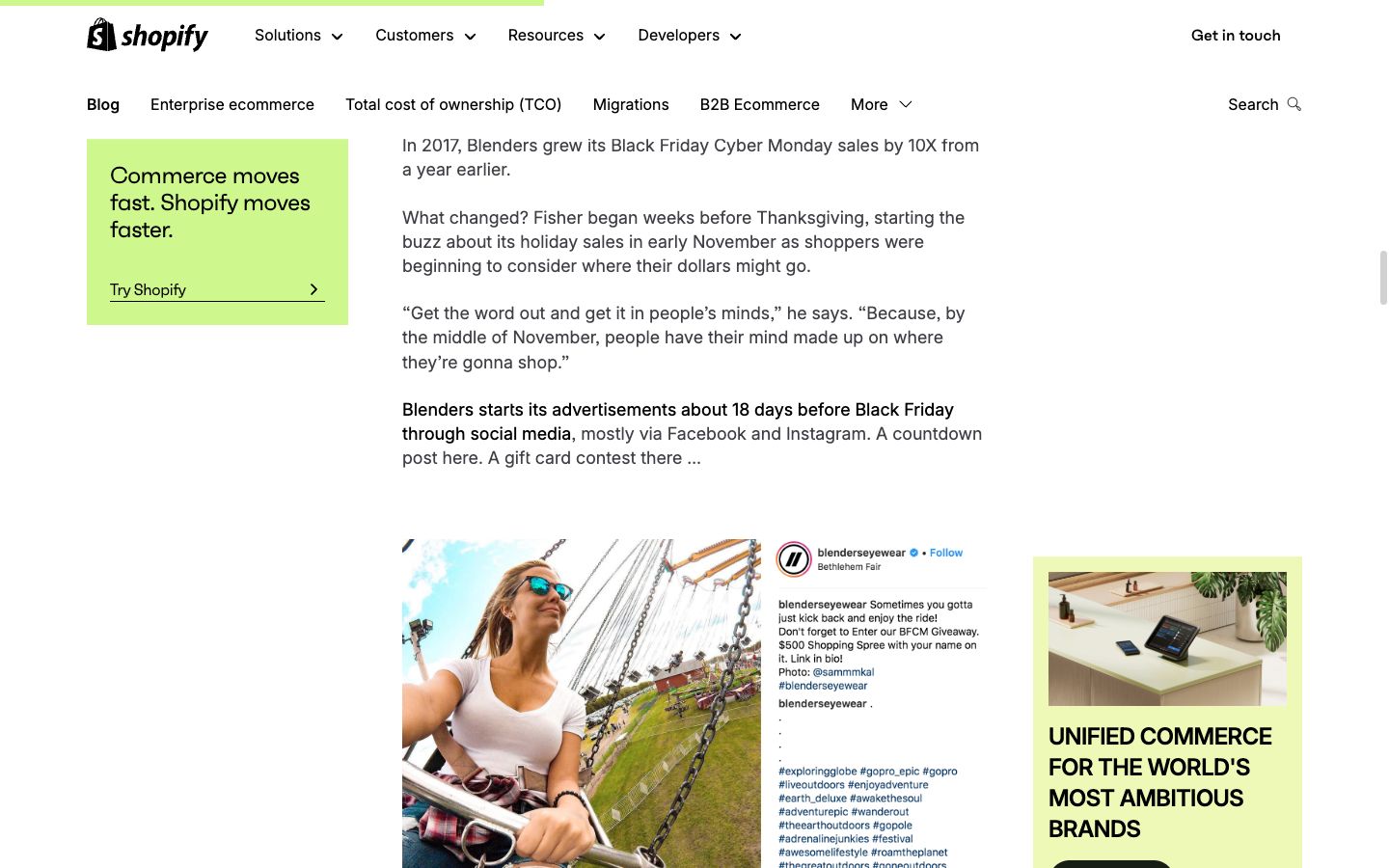
Large brands often begin the campaign before the price changes. Represent uses early access. Gymshark asks shoppers to build wishlists before the rush. Blenders Eyewear began promoting its Black Friday campaign well before launch and collected 17,000 email signups.
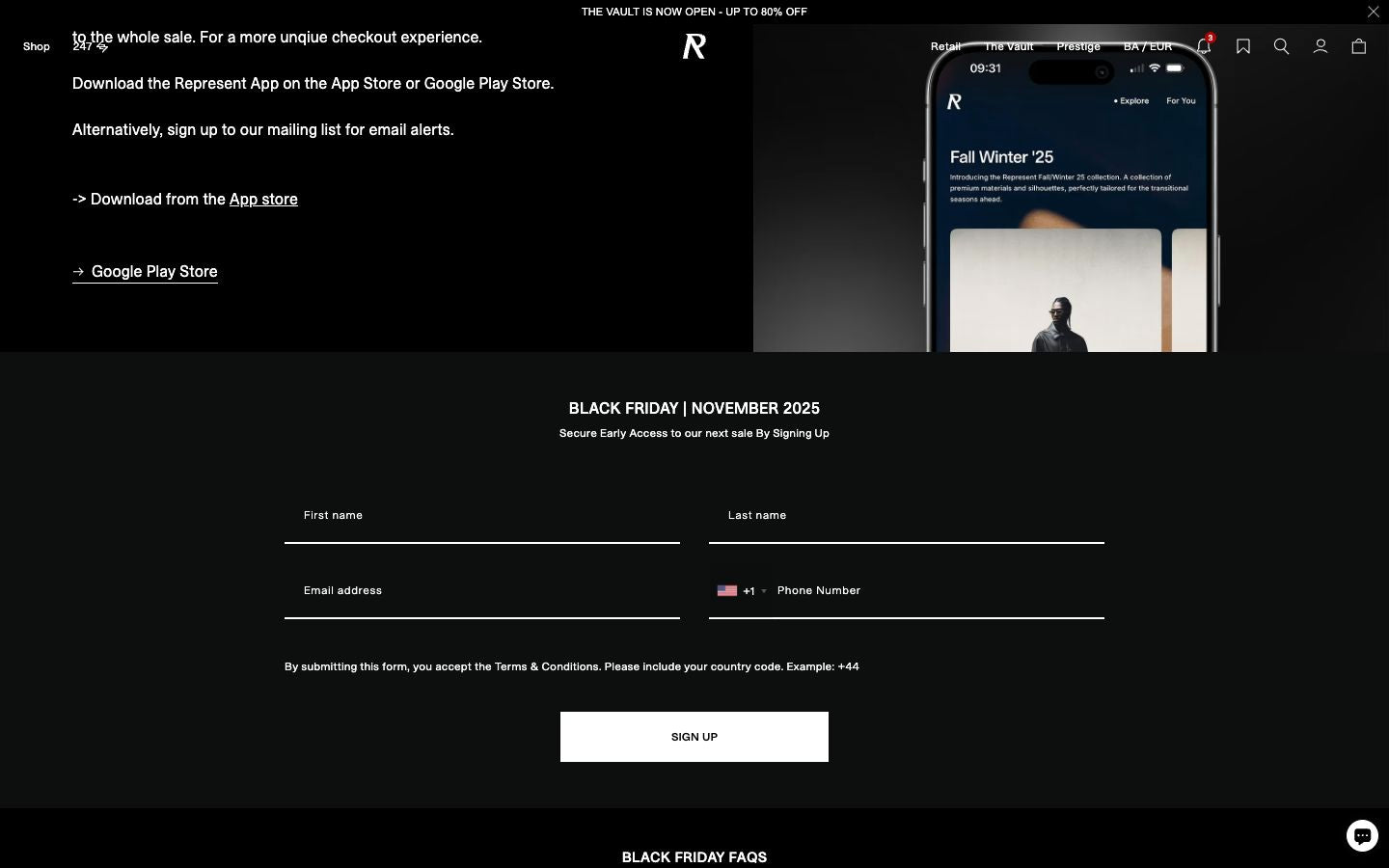
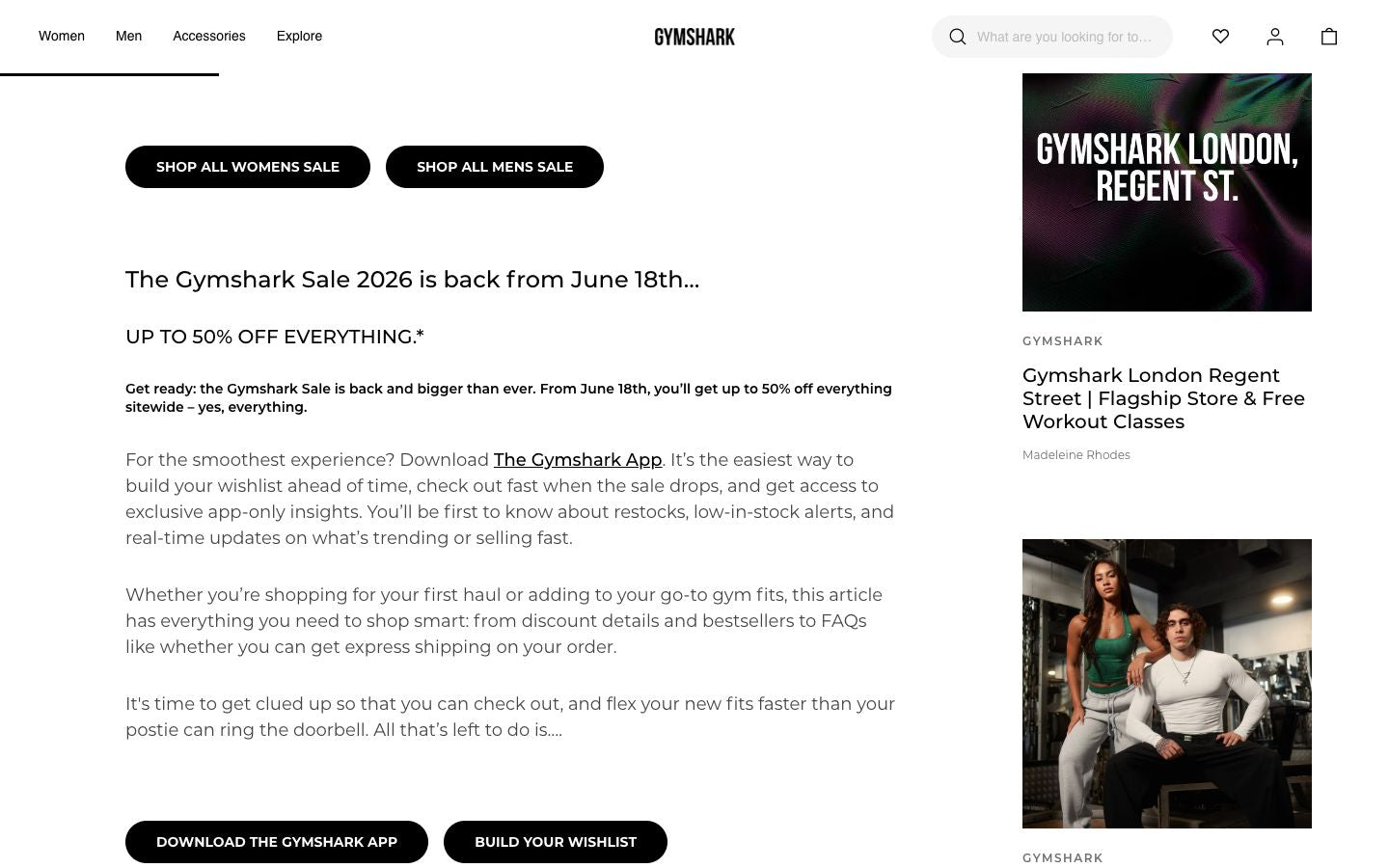
The mechanism changes, but the goal is the same: shoppers should know the date, understand the offer, and have products in mind before the sale opens.
Prepare inventory and sold-out behavior
Choose the campaign products, identify likely best sellers, and reserve stock for damaged items or inventory mistakes. Decide what happens when an item sells out. It may move lower in the collection, offer a waitlist, or point customers toward an alternative. Make that decision before traffic arrives.
Launch together: prepare every store state first
Choose one price method
A visible sale price, an automatic discount, and a discount code all create different customer experiences. With a visible sale price, the saving appears while browsing. With an automatic discount, the final result may become clearest in cart. With a code, the customer needs the code at the moment of payment.
Choose one method and explain it everywhere. Do not make the customer guess when or where the saving will appear.
Choose one time and timezone
Friday at 9:00 is incomplete for an international team. Specify London, New York, the Shopify store timezone, or another agreed timezone. Use the same answer in the discount, theme changes, email, paid media, and support brief.
Build four versions of the store
The permanent storefront before campaign messaging appears.
Early access, signup, wishlist, and campaign preview.
Active price, campaign design, terms, and buying path.
Normal prices restored and old campaign links kept useful.
Test every state on desktop and mobile. Use an included product and an excluded product. Open a direct product link. Test a sold-out product. Check the final minute and the first minute after the sale.
Shopify Rollouts can schedule eligible theme and checkout or customer-account changes on supported plans. The exact tool can vary by store, but the operating rule remains the same: prepare first, test every state, and publish the complete change together.
Across the store: let the offer survive every click
Customers do not always start on the homepage. An Instagram ad may land on a product page. A search result may open a collection. A returning customer may go directly to the cart. Every path still needs to make sense.
The bad version creates doubt. The homepage promises 25% off, the product page still shows the regular price without context, and the cart gives no confirmation. The customer is expected to trust that the saving will appear later.
The good version answers one question at every step. Campaign wording, eligibility, prices, deadlines, and terms agree. The customer never needs to reverse-engineer the promotion.
Keep campaign infrastructure fast
Represent's Shopify case study reports roughly 25x normal Black Friday traffic and 8x conversions. At that scale, oversized images, duplicate trackers, and heavy campaign apps become launch risks. Optimize the temporary campaign state with the same care as the permanent store.
Behind the storefront: prepare the team for the offer
A large sale creates more orders, questions, exceptions, and mistakes. The storefront can reduce that pressure by answering the most common questions before checkout:
- Why did my discount not work?
- Is this product excluded?
- Can I change or cancel my order?
- When will the order ship?
- Can I return a sale item?
Prepare saved replies for the questions that still reach support. Confirm warehouse capacity, likely dispatch times, sale return rules, cancellation cutoffs, and the person who owns campaign decisions during launch.
If normal delivery takes two days but campaign orders may take five, say that before payment. A promotion does not end at checkout; it continues through fulfillment, tracking, delivery, support, and returns.
End cleanly, then learn from the complete campaign
When the deadline passes, the discount should stop, normal prices should return, sale messages should disappear, and old campaign links should lead somewhere useful. Support should know the event has ended. Treat the ending as another scheduled launch.
Then review more than revenue. Check conversion rate, average order value, support tickets, cancellations, returns, and the points where shoppers left the buying path. Write down what needs to change before the next campaign.
These are campaign results, not evidence that one banner or one discount setting caused the outcome. The useful lesson is the operating system around the offer: prepare, launch together, carry the promise, support the demand, and end cleanly.
Sources
DDrippy is not affiliated with or endorsed by the brands in this guide. Results belong to the periods described in each source.